
See how wooden pallets affect cargo safety in transport.
Learn why choosing the right wooden pallet matters for protecting goods during transport and handling.
Contents
Why does the pallet affect cargo safety?
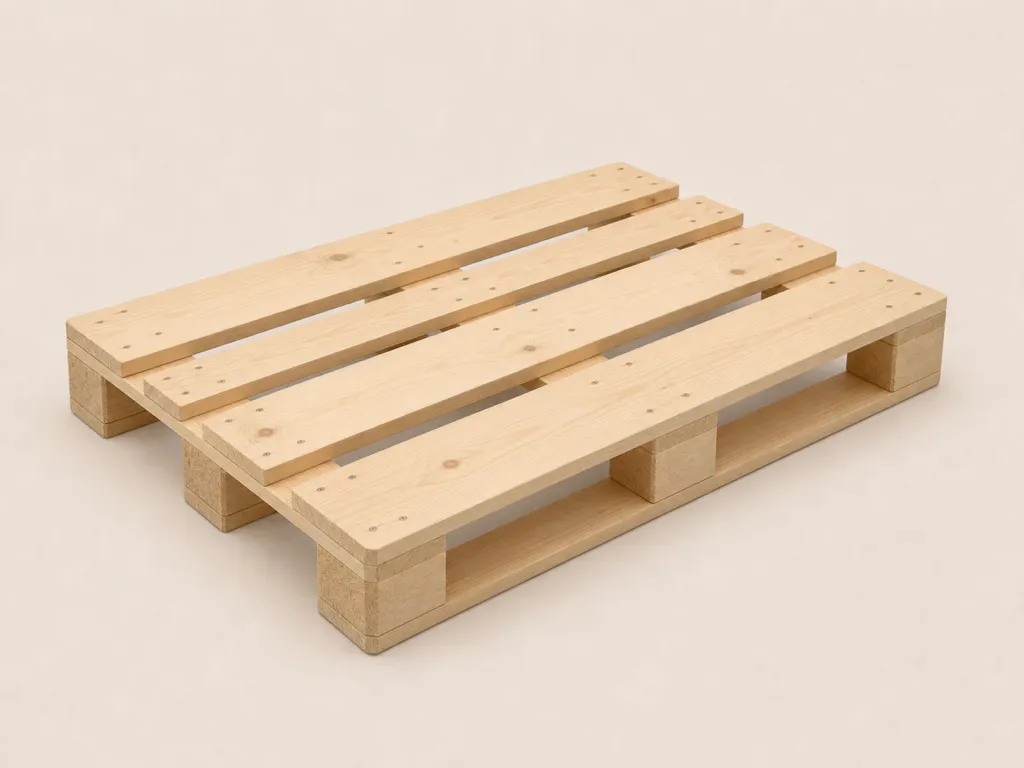
A pallet is not just an accessory to the packaging. It is the base of the entire load unit and has a direct impact on product stability during transport, storage, and handling.
If the pallet is damaged or poorly chosen, the risk of shifting, tilting, or product damage increases.
Which pallet features matter most?
The key factors are size, load capacity, and technical condition. A pallet that is too small may not support the goods properly, while a weak structure may fail under weight.
It also matters whether the load is distributed evenly and secured correctly.
Does technical condition really matter?
Yes, very much. Cracked boards, loose elements, or heavy wear can lead to failure during lifting or transport. That means a higher risk of losses and operational disruption.
That is why pallets should be checked before use.
How can you improve shipment safety?
The best starting point is choosing the right pallet type for the goods. After that, the load should be placed evenly, secured properly, and checked before dispatch.
These are simple steps, but they make a real difference in transport safety.
FAQ: Common questions about cargo safety and pallets
Can the wrong pallet damage goods? Yes, a poorly matched or damaged pallet increases the risk of instability and transport failure.
What matters more: size or load capacity? Both matter, because the pallet must be large enough and strong enough for the load.
Can a used pallet still be safe? Yes, as long as it is in good technical condition and suitable for the intended use.
How can I improve transport safety on pallets? Choose the correct pallet type, distribute the load evenly, and inspect the pallet before shipping.
Quick selection table
- DHP
- 600 x 800 mm / trade, industry, warehouse circulation
- EURO / EPAL
- 800 x 1200 mm / standard logistics
- Export
- one-way pallets when there is no return loop
- Variants
- new, dry IPPC, used, depending on the process
- Enquiry
- type, format, quantity, delivery place, timing
Enquiry checklist
- Share the load format and expected load.
- State whether the pallet must return to circulation.
- Mark if a dry or IPPC variant is required.
- Add delivery location, timing and planned quantity.
Send pallet parameters for pricing.
Type, format, quantity, delivery location, timing and whether the pallet works in export, warehouse circulation or a return loop are enough to start.