
We explain what affects wooden pallet load capacity and how to match it to the load.
Learn what influences the load capacity of a wooden pallet and how to safely choose the right type for the weight and handling method of your goods.
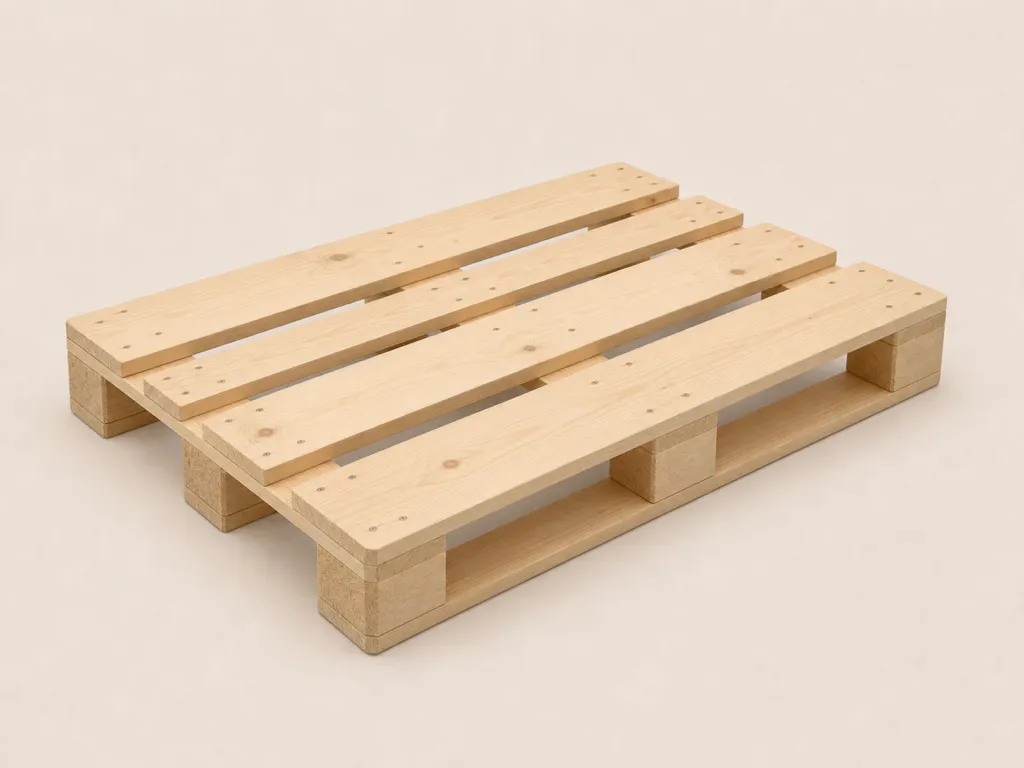
Contents
What does pallet load capacity mean?
Load capacity refers to the maximum weight a pallet can safely support under specific operating conditions. For companies buying pallets, this is one of the most important parameters because it directly affects transport safety, storage stability, and handling efficiency.
A pallet that is too weak for the load may lead to product damage and unnecessary costs.
What affects the load capacity of a pallet?
Several factors matter, including the pallet type, wood quality, structural design, technical condition, and the way the load is placed on top. It also matters whether the pallet will only be transported or also stacked and stored for longer periods.
Even a good pallet may fail if the load is concentrated in one area.
Why is load distribution so important?
Even weight distribution helps the pallet work as intended. If the cargo presses only on one part of the structure, the risk of cracking, bending, and forklift handling problems increases.
That is why it is important to think not only about total weight, but also about the shape and placement of the goods.
How do you choose the right pallet type?
For lighter and less demanding loads, one-way pallets may be enough. For standard warehouse and transport operations, EURO / EPAL pallets are a common choice. In retail or smaller unit handling, DHP pallets may be more suitable.
The safest approach is to provide the supplier with the cargo type, weight, storage method, and destination.
FAQ: Common questions about pallet load capacity
What does wooden pallet load capacity depend on? It depends on the construction, material quality, technical condition, and the way the load is distributed.
Can every pallet carry the same weight? No, different pallet types are designed for different loads and applications.
Does load distribution matter? Yes, uneven loading can weaken the pallet and increase the risk of damage.
How do I choose a pallet for heavy goods? The best option is to consult the supplier with the weight, cargo type, and handling conditions.
Quick selection table
- DHP
- 600 x 800 mm / trade, industry, warehouse circulation
- EURO / EPAL
- 800 x 1200 mm / standard logistics
- Export
- one-way pallets when there is no return loop
- Variants
- new, dry IPPC, used, depending on the process
- Enquiry
- type, format, quantity, delivery place, timing
Enquiry checklist
- Share the load format and expected load.
- State whether the pallet must return to circulation.
- Mark if a dry or IPPC variant is required.
- Add delivery location, timing and planned quantity.
Send pallet parameters for pricing.
Type, format, quantity, delivery location, timing and whether the pallet works in export, warehouse circulation or a return loop are enough to start.