
A practical guide on how to choose the right wooden pallet for transport and storage.
Find out how to select the right wooden pallet for your goods, delivery model, and warehouse or export requirements.
Contents
Why does pallet selection matter?
A wooden pallet is not just a base for goods. It is a key logistics element that affects transport safety, warehouse handling, and the overall efficiency of the supply chain. If the pallet is poorly matched to the load, it may cause damage, instability, or unnecessary operational costs.
That is why choosing the right type of pallet should always start with the actual use case.
What should you consider before choosing a pallet?
The most important factors are pallet dimensions, load capacity, the type of goods, and the way the pallet will be used. It also matters whether the pallet is meant for regular warehouse circulation, export shipping, retail distribution, or one-way transport.
A company sending goods abroad may need a different solution than a warehouse operating only on the domestic market.
Which pallet types are most common?
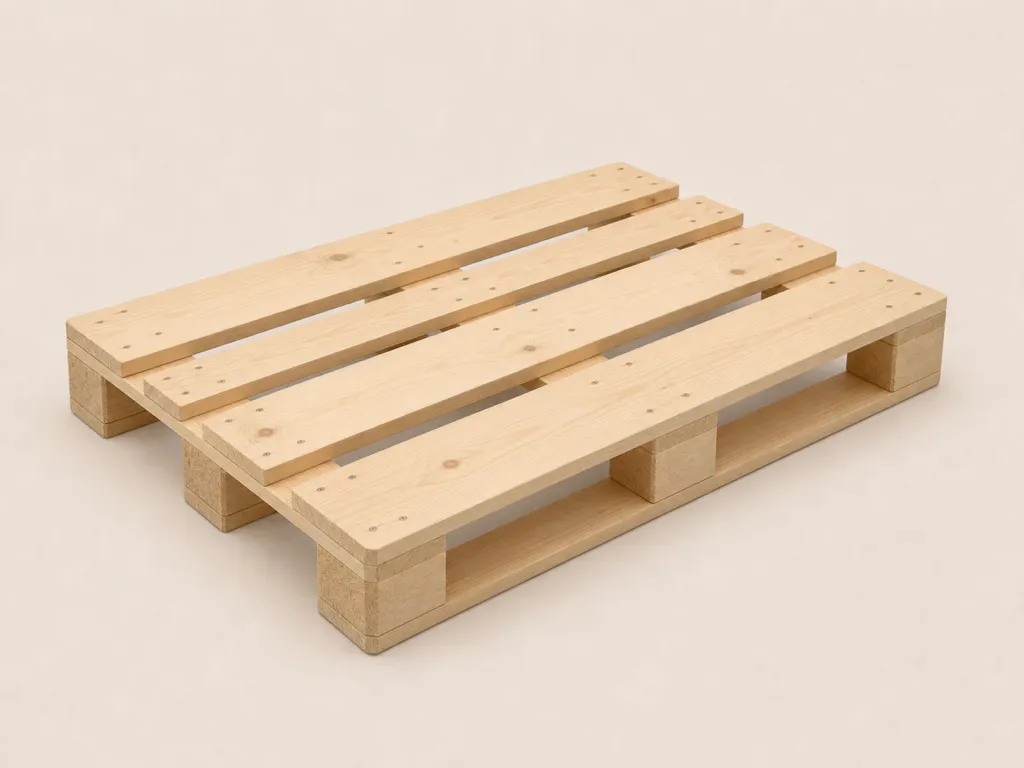
The most common options include EURO / EPAL pallets, DHP / Düsseldorfer pallets, and one-way export pallets. EURO pallets are useful for standard logistics operations, DHP pallets are often chosen for retail and compact handling, and one-way pallets are popular in export shipments without return circulation.
The right choice depends on how much weight the pallet must carry and how often it will be handled.
What information should you provide when requesting a quote?
To receive a useful offer, it is best to provide the pallet type, expected quantity, delivery location, and required delivery date. If you are unsure which variant is right, describe the goods, their weight, and the destination market.
This allows the supplier to recommend a practical option faster.
FAQ: Common questions about choosing a wooden pallet
How do I choose the right pallet for export? You should consider the destination market, the load weight, whether the pallet will be returned, and whether IPPC / ISPM 15 marking is required.
Which pallet is better for warehouse use? In many cases, EURO / EPAL pallets are the standard choice, but the correct option depends on the load and handling system.
When should I choose a DHP pallet? DHP pallets are often a good solution for retail distribution, compact loads, and warehouse operations with limited space.
What should I include in my pallet inquiry? The pallet type, quantity, delivery address, delivery date, and ideally a short description of the goods and their use.
Quick selection table
- DHP
- 600 x 800 mm / trade, industry, warehouse circulation
- EURO / EPAL
- 800 x 1200 mm / standard logistics
- Export
- one-way pallets when there is no return loop
- Variants
- new, dry IPPC, used, depending on the process
- Enquiry
- type, format, quantity, delivery place, timing
Enquiry checklist
- Share the load format and expected load.
- State whether the pallet must return to circulation.
- Mark if a dry or IPPC variant is required.
- Add delivery location, timing and planned quantity.
Send pallet parameters for pricing.
Type, format, quantity, delivery location, timing and whether the pallet works in export, warehouse circulation or a return loop are enough to start.