
How to choose a wooden pallet for transport, warehouse and export.
A practical guide to DHP / Düsseldorfer pallets, EURO / EPAL pallets and one-way export pallets.
Contents
Start with the pallet circulation
A pallet is not only a base under the load. In practice it is part of a process: production, picking, warehouse handling, transport and unloading at the receiver. The same load can need a different pallet if it circulates inside a warehouse, moves into retail distribution or leaves the return loop entirely.
A useful enquiry starts with three questions: what is the load format, what load must the pallet carry and does the pallet need to return. Only after that does it make sense to compare dry, used, IPPC or one-way variants.
The pallet name starts the conversation, but format, load and circulation should lead the purchasing decision.
DHP / Düsseldorfer for smaller formats and warehouse circulation
DHP / Düsseldorfer pallets are usually selected when a 600 x 800 mm format is needed and smaller handling units must move efficiently. The construction combines wooden boards, plastic blocks and metal elements, so it fits trade, industrial handling and warehouse circulation.
When asking about DHP, state whether you need new pallets, dry IPPC pallets or used pallets. For repeat purchasing, expected quantity, delivery timing and the way pallets should be packed in a batch are also important.
EURO / EPAL for standard logistics
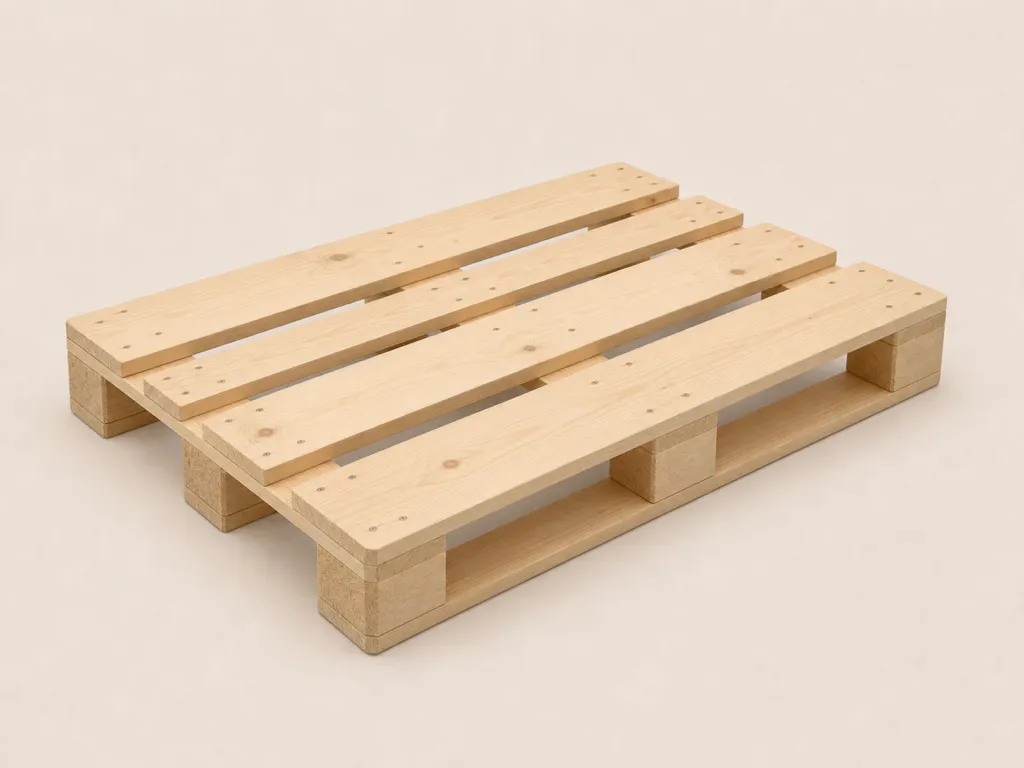
The EURO / EPAL pallet in 800 x 1200 mm format is the standard choice for predictable transport and storage. It works when the load needs to fit typical warehouse systems, racks, forklifts, docks and distribution networks built around a common footprint.
Choose this type when repeatability, receiver expectations and space planning matter. In the enquiry, specify whether you need certified pallets, a dry variant, a defined load and delivery prepared around a production or warehouse schedule.
One-way pallets for export without a return loop
One-way pallets are practical when goods travel to the receiver without a plan to recover the pallet. In export flows the key factors are often function, cost and fit for a specific load, rather than long-term return circulation.
For export, confirm early whether IPPC treatment is required and what documents or markings the destination country expects. A one-way pallet can be the right decision, but only when format, strength and clearance requirements are understood before dispatch.
Format and load matter more than the name
The pallet name starts the conversation, but the purchasing decision should be led by parameters. Load size, weight distribution, lifting method, stack height, warehouse type and receiver requirements all matter. A pallet under light cartons works differently from one under industrial components.
Share not only the total weight, but also the nature of the load: is the pressure distributed evenly or concentrated in points, and is the product secured with film, straps or separators. These details help confirm a safer variant and avoid surprises during unloading.
Dry, IPPC and used variants
A dry variant matters when timber moisture could affect packaging, labels, cartons or storage conditions. IPPC is important in export and in shipments where treated and marked timber packaging is required.
A used pallet can make sense in domestic or warehouse circulation if its technical condition matches the use case. For sensitive goods, export or network requirements, confirm the variant in advance instead of treating it as a small order detail.
What to include in an offer request
The best enquiry does not need to be long. It needs to be concrete, because that makes availability, variant and timing easier to confirm. The minimum information is pallet type, format, quantity, delivery location, required timing and use case.
Add whether the pallets will work in warehouse circulation, export, production, one-way transport or a return loop. If the receiver has its own specification, send it immediately. That shortens the conversation and reduces the risk of choosing a pallet that looks similar but does not fit the process.
Quick selection table
- DHP
- 600 x 800 mm / trade, industry, warehouse circulation
- EURO / EPAL
- 800 x 1200 mm / standard logistics
- Export
- one-way pallets when there is no return loop
- Variants
- new, dry IPPC, used, depending on the process
- Enquiry
- type, format, quantity, delivery place, timing
Enquiry checklist
- Share the load format and expected load.
- State whether the pallet must return to circulation.
- Mark if a dry or IPPC variant is required.
- Add delivery location, timing and planned quantity.
Send pallet parameters for pricing.
Type, format, quantity, delivery location, timing and whether the pallet works in export, warehouse circulation or a return loop are enough to start.