
We explain the difference between export pallets for the EU and outside the EU and how to choose the right option.
Learn what requirements apply to export pallets depending on the destination and what to check when organizing international shipments.
Contents
What are export pallets?
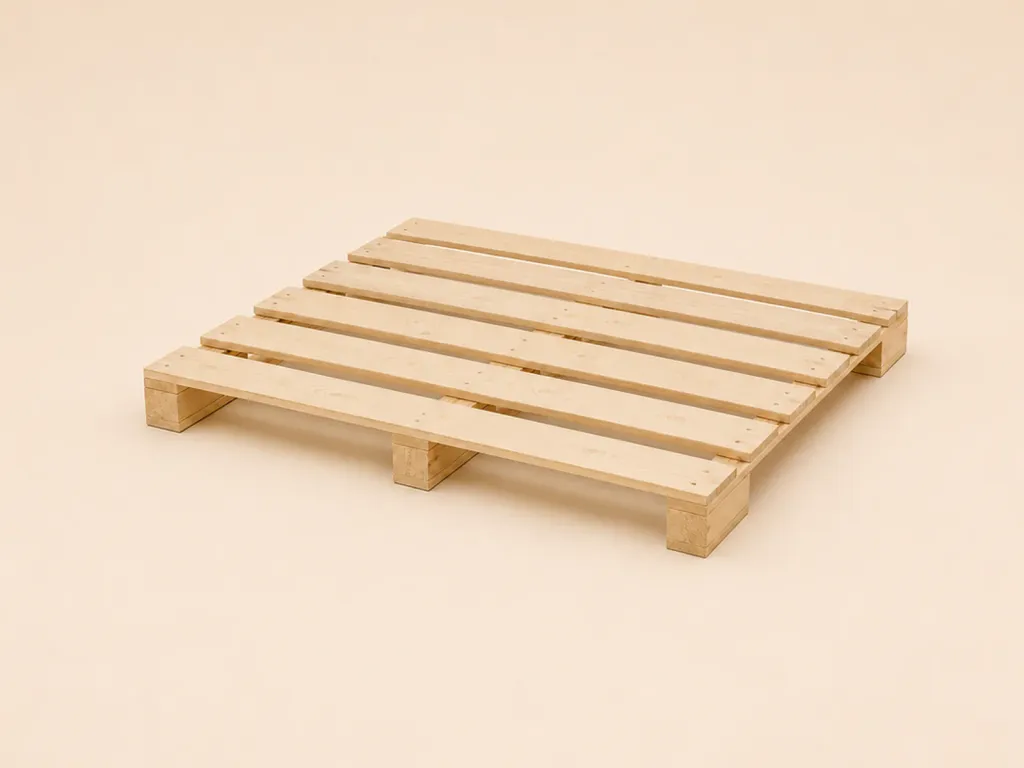
Export pallets are wooden pallets intended for shipping goods beyond a local warehouse loop, often to foreign customers. Depending on the route, this may include standard pallets as well as lighter one-way export pallets.
The key is to match the pallet not only to the load, but also to the requirements of the destination market.
Is exporting within the EU the same as exporting outside the EU?
Not always. Within the EU, the main focus is usually on pallet format, load capacity, technical condition, and customer acceptance. For shipments outside the EU, additional phytosanitary treatment and IPPC / ISPM 15 marking are more often required.
That is why the target market should be discussed from the start.
How do you choose the right export pallet?
The choice depends on the type of goods, the expected number of handling operations, whether pallet return is planned, and what the customer requires. In some cases, a one-way pallet is enough, while in others a stronger standard such as EURO / EPAL is the better option.
Storage duration and cargo sensitivity may also influence the choice.
What should you confirm before shipping?
Before arranging transport, it is worth confirming the pallet type, condition, required markings, and delivery schedule. This helps avoid border issues, customer complaints, and delays.
A well-chosen export pallet is not a minor detail. It is part of shipment security.
FAQ: Common questions about export pallets
Is an IPPC pallet always required for export? No, but for many destinations outside the EU it is mandatory.
Which pallet should I choose for international shipping? That depends on the destination, the load type, and whether the pallet is expected to return.
Are one-way pallets suitable for export? Yes, they are widely used for shipments without return circulation.
What should be confirmed before ordering export pallets? The pallet type, quantity, destination, delivery date, and destination-market requirements.
Quick selection table
- DHP
- 600 x 800 mm / trade, industry, warehouse circulation
- EURO / EPAL
- 800 x 1200 mm / standard logistics
- Export
- one-way pallets when there is no return loop
- Variants
- new, dry IPPC, used, depending on the process
- Enquiry
- type, format, quantity, delivery place, timing
Enquiry checklist
- Share the load format and expected load.
- State whether the pallet must return to circulation.
- Mark if a dry or IPPC variant is required.
- Add delivery location, timing and planned quantity.
Send pallet parameters for pricing.
Type, format, quantity, delivery location, timing and whether the pallet works in export, warehouse circulation or a return loop are enough to start.